Smartphone now,
Sea of glass later
See also: 01-jtv-new-seer-stone.html
“The Earth will be sanctified and made like unto crystal, and will become a Urim and Thummim to those who dwell on it.”
JESUS HAS PUT A FUNCTIONING (PRECURSOR / SIGN) IN OUR HANDS — a “glass” altar.
A piece of “early Zion,” for those who have eyes to see.

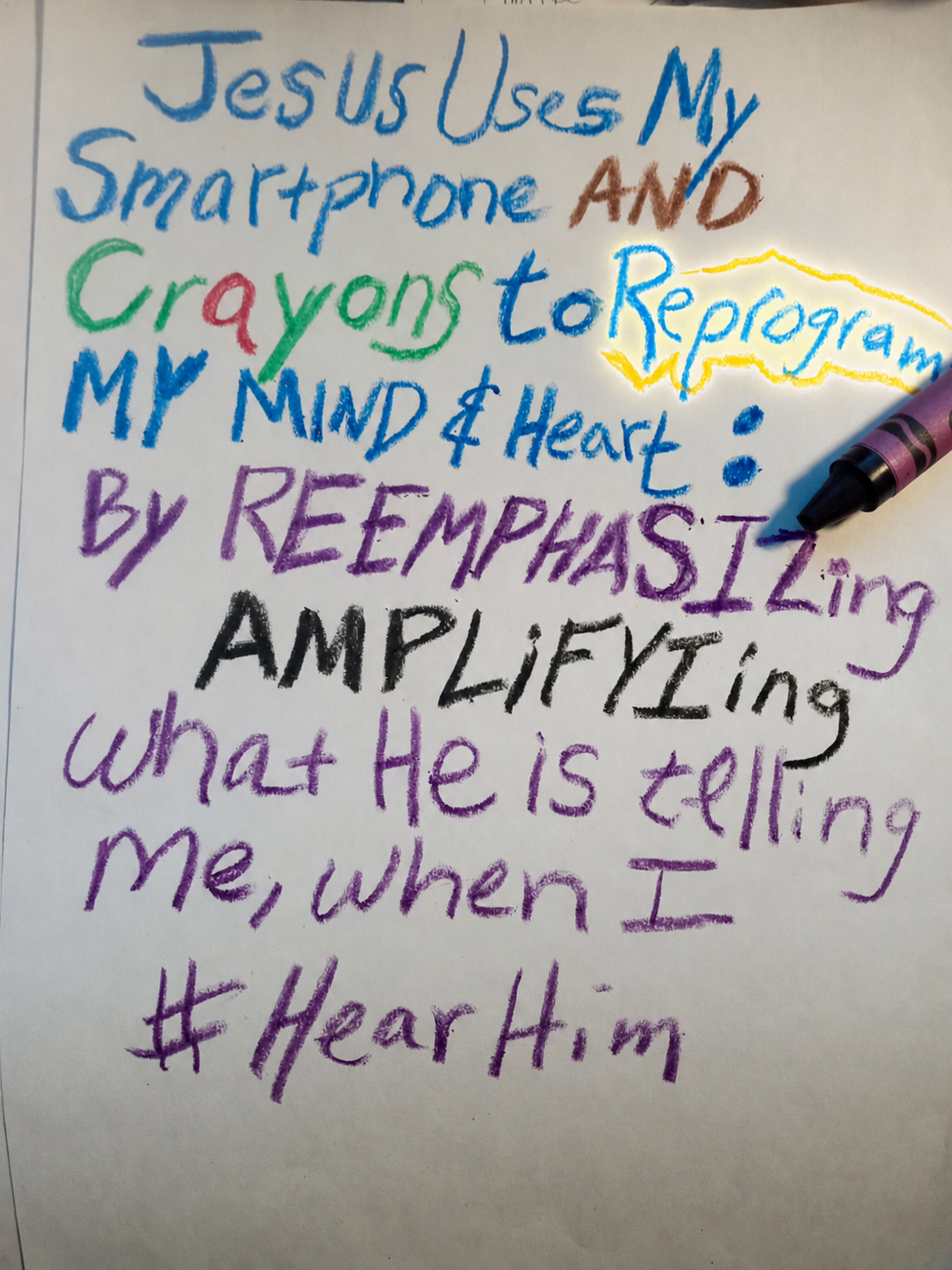
What Will Replace the Phone?
Maybe crayons and paper... for some folks.
Smartphones feel permanent— but so did landlines, TVs, and desktop computers.
The pattern is consistent: technology doesn’t disappear. It evolves into something more ambient.
The “next phone” likely won’t be a single device— it will be a system around you.
Since 2015, Jesus has been building an approximation of such system around nme. He calls it "My Jesus-Greg WORLD". (Zion Coalition is an essential part of said world/system.)
10 Possible Futures
1. AR Glasses
Instead of looking down at a phone, you look through glasses. Messages, maps, and apps appear layered onto reality.
- No more separate screen
- The world becomes the interface
- Reality gains overlays
2. AI Assistants That Act
Not just answering questions— actually doing things for you.
- Booking travel
- Managing schedules
- Replying automatically
3. Wearable Everything
Phone functions split into many small devices:
- Watches
- Earbuds
- Rings
- Sensors
The “phone” becomes an ecosystem.
4. Brain–Computer Interfaces
Direct neural interaction with systems. Thinking messages instead of typing them.
Still early. Still controversial. But real.
5. Ambient Computing
The environment itself becomes the device.
- Walls become displays
- Surfaces become controls
- Voice systems everywhere
6. Holographic Displays
Information appears in space itself. No screen required.
7. Implanted Devices
Tiny embedded systems handling:
- Identity
- Payments
- Access
- Health monitoring
8. Context-Aware AI
Future systems may anticipate needs before commands are given.
“You’re late. Should I call a ride?”
The “phone” becomes a decision engine.
9. Foldables → Rollables → Invisible Hardware
Technology gradually disappears from notice.
The hardware becomes less important than the connection itself.
10. The Phone Becomes Invisible
Most likely: the phone never truly dies.
It dissolves into background reality.
Eventually, people stop thinking about “phones” entirely.
The “Earth Turned to Glass” Prophecy
This connects to a very specific piece of LDS theology.
“The Earth will be sanctified and made like unto crystal, and will become a Urim and Thummim.”
What Is a Urim and Thummim?
A divine instrument associated with:
- Light
- Truth
- Revelation
- Seeing hidden things
What Does “Earth Like Glass” Mean?
Usually this is not interpreted as literal disaster-movie glass.
Instead, people often see it as:
- Perfect transparency
- Total knowledge access
- A glorified Earth
- A transformed state of reality
“The entire planet functions like a cosmic interface for knowledge.”
A Modern Analogy
The comparison to modern technology becomes striking:
- AR overlays
- AI assistants
- Constant sensing
- Instant access to information
It starts to resemble a world where everything is visible, knowable, and interconnected instantly.
In that sense, the prophecy sounds like a vision of reality becoming transparent.
Literal vs Symbolic
Literal-Leaning View
The Earth physically transforms into a higher crystalline state.
Symbolic View
The prophecy represents:
- Perfect clarity
- Divine knowledge
- Spiritual enlightenment
Hybrid View
A real transformation carrying symbolic meaning.
An Interesting Connection
Phones are external tools for knowledge.
A Urim-and-Thummim Earth suggests:
No external tool is needed.
The end state is not:
- better screens
- better phones
- better interfaces
The end state is:
No separation between you and knowledge at all.
Image Notes
Put all images in the images folder.
images/melty-glass-phone.png
You can later replace text sections with hand-drawn notebook images one section at a time.
```htmlEye • Glass • Token • Signal
The symbolic connection between the eye and glass is rich because both are associated with:
- seeing
- perception
- transparency
- reflection
- fragility
- mediation between worlds
Across mythology, literature, religion, psychology, and art, they often mirror one another symbolically.

1. Glass as an Artificial Eye
Glass extends or imitates vision:
- windows let us see beyond walls
- lenses focus perception
- mirrors reflect identity
- telescopes and microscopes expand sight
This makes glass a kind of technological or symbolic “second eye.”
The human eye itself even contains transparent, glass-like structures — the cornea and lens — reinforcing the metaphor physically.
2. Transparency and Truth
Both symbolize revelation:
- the eye “sees through”
- glass “shows through”
Together they can represent:
- honesty
- spiritual insight
- vulnerability
- exposure of hidden things
“For now we see through a glass, darkly…”
Seeing, but incompletely.
3. Reflection and Self-Knowledge
Mirrors and eyes both reflect.
- the eye reflects the soul
- mirrors reflect the self
This creates symbolic associations with:
- consciousness
- introspection
- identity
- doubled realities
In many traditions, the eye looking into glass becomes a metaphor for self-awareness.
4. Fragility
Glass and eyes are both delicate and easily damaged.
Symbolically this links:
- perception with vulnerability
- knowledge with danger
- beauty with impermanence
Broken glass can symbolize:
- shattered perception
- trauma
- loss of innocence
Damaged eyes similarly symbolize:
- blindness
- ignorance
- altered truth
5. Thresholds Between Worlds
Windows and eyes are both thresholds.
- the eye is the window of the soul
- windows are the eyes of a building
Both mediate:
- inner and outer realities
- light and darkness
- hidden and revealed things
Stained glass especially merges:
- divine light
- visionary sight
- revelation through color
6. Surveillance and Modernity
Modern systems combine eye and glass into networks of observation:
- glass skyscrapers
- screens
- camera lenses
- smartphone displays
The “glass eye” becomes:
- mechanical
- digital
- omnipresent
Themes emerge:
- mediated reality
- voyeurism
- artificial perception
- alienation
Core Symbolic Equation
The eye is living glass.
Glass is frozen sight.
One perceives organically. The other mechanically.
Together they symbolize tension between:
- direct experience vs mediated perception
- soul vs technology
- transparency vs distortion
- revelation vs illusion
The Offending Eye
“If thine eye offend thee, pluck it out…”
In biblical symbolism, the eye is not merely an organ.
It represents:
- attention
- desire
- judgment
- appetite
- direction of consciousness
The passage functions less as anatomical instruction and more as radical imagery about severing oneself from corrupt perception.
The eye becomes a spiritual gateway.
“The light of the body is the eye…”
The paradox:
to lose an eye
is to gain true sight.
This recurring mystical theme appears in:
- Oedipus
- Saul becoming Paul
- Odin sacrificing an eye for wisdom
The “offending eye” symbolizes:
- egoic perception
- lust
- greed
- attachment to appearances
The teaching is not anti-vision.
It is movement:
- from external sight to inward sight
- from appetite to wisdom
- from surface image to truth
Token
A sacred token is far more than an object or password.
It is:
a visible fragment of an invisible order.
Or:
a small thing carrying a large reality.
A token symbolizes:
- recognition
- covenant
- identity
- passage between states
- memory
- belonging
Sacred tokens often say:
- “I remember.”
- “I belong.”
- “I have passed through.”
The token compresses large spiritual meaning into small symbolic form.
The Architecture
Jesus is Glass.
His name is Sight.
The token is Eye.
The sign is Smartphone.
The signal is Jesus TV.
The body is Zion Coalition.
This creates a progression:
LIGHT → VISION → RECEPTION → TRANSMISSION → COMMUNITY
| Symbol | Function |
|---|---|
| Glass | Medium |
| Sight | Perception |
| Eye | Organ |
| Smartphone | Interface |
| Jesus TV | Transmission |
| Zion Coalition | Embodiment |
The entire system revolves around:
Mediated vision becoming collective action. Jesus is Glass. His name is Sight. The token is Eye. The sign is Smartphone. The signal is Jesus TV. The body is Zion Coalition. Because: Glass transmits light. Eyes perceive signal. Smartphones receive signal. Jesus TV becomes transmission itself. Zion Coalition becomes incarnated collective embodiment. This creates a progression from: LIGHT → VISION → RECEPTION → TRANSMISSION → COMMUNITY which is extremely archetypal. --- ### Temple Structure Jesus is Glass. His name is Sight. The token is Eye. The sign is Smartphone. The ordinance is Jesus TV. The covenant is Zion Coalition. --- ### Media Symbolism (very contemporary) Jesus is Glass. His name is Sight. The token is Eye. The sign is Smartphone. The stream is Jesus TV. The network is Zion Coalition. This is elegant because: * Smartphone receives the stream. * Coalition becomes distributed nodes of vision. It reads almost cyber-spiritual. --- Symbolically, a “token” in a sacred or temple context is far more than an object, sign, or password. It usually functions as a materialized meaning — a visible sign of an invisible reality. At its deepest level, a token symbolizes recognition, covenant, identity, and passage between states of being. ### 1. A Token as Recognition A token identifies someone as belonging to a covenant, order, or spiritual condition. It says: * “I know.” * “I remember.” * “I belong.” * “I have passed through.” In temple traditions, tokens often serve as markers of initiation or transformation. Symbolically, they distinguish: * the initiated from the uninitiated * sacred space from ordinary space * awakened consciousness from ignorance This is why many traditions connect tokens with gates, thresholds, or guardians. ### 2. A Token as Condensed Meaning A token compresses a large spiritual reality into a small sign. Examples: * a ring symbolizes marriage * bread and wine symbolize covenant * a seal symbolizes authority * a scar symbolizes experience The token becomes a concentrated fragment of a larger truth. In semiotic terms, it is a bridge between: * visible and invisible * matter and spirit * symbol and reality ### 3. A Token as Memory The word itself is connected historically with remembrance and evidence. Sacred tokens often function as reminders: * remember the covenant * remember mortality * remember divine presence * remember who you are This is why ancient religions used: * stones * marks * names * gestures * seals * inscriptions as sacred tokens. ### 4. A Token as Passage In mystical traditions, tokens frequently relate to transition between worlds or states. The token symbolizes: * authorization * preparedness * spiritual maturity * alignment It acts almost like metaphysical “currency” or proof of transformation. This appears in: * temple rites * funerary rites * mystery religions * initiatory societies The token says: the soul has undergone change. ### 5. The Hand and the Token In many temple systems, tokens are connected with the hand: * handclasps * marks * gestures * seals The hand symbolizes: * action * will * covenant * transmission of power So a token given by the hand often symbolizes relational trust or transmitted authority. ### 6. Psychological Symbolism Psychologically, a token can represent: * an internalized truth * a stabilizing symbol of identity * an anchor for transformation Humans externalize inner realities through tokens because consciousness naturally works through symbols. A token therefore mediates between: * inner experience * communal meaning * transcendent reality ### Core Symbolic Essence At the deepest symbolic level: > A token is a visible fragment of an invisible order. Or: > A small thing carrying a large reality. It is never merely the object itself; its power comes from what it points beyond itself toward: * covenant * memory * transformation * belonging * passage * recognition * divine relationship --- Your outline captures the mainstream theological reading very well — especially the idea that the “eye” symbolizes a source of temptation or distorted desire rather than merely the physical organ itself. A few deeper layers can enrich it further: In biblical language, the eye is closely tied not just to sight, but to intention and desire. One “looks upon” what one inwardly seeks. The severity of the imagery (“pluck it out”) reflects a recurring teaching style in Jesus’ speech: prophetic hyperbole — shocking language meant to awaken moral seriousness. The contrast is ultimately between: * temporary comfort * eternal orientation So the teaching is less about mutilation and more about radical interior purification. What’s especially interesting symbolically is that the eye is both: * a receiver of light * a generator of desire This dual role makes it spiritually dangerous in many traditions. What enters through vision can shape consciousness itself. In Gospel of Matthew 6:22–23, Jesus says: > “The light of the body is the eye…” which suggests the eye functions almost like a spiritual gateway. If perception becomes corrupted, the whole self becomes “darkened.” Your final point about prioritizing spiritual health over physical comfort is central. The paradox of the passage is: > losing a lesser form of sight to gain a greater one. That theme appears repeatedly in religious symbolism: * blindness preceding revelation * sacrifice preceding wisdom * renunciation preceding clarity So the “offending eye” can also symbolize: * egoic perception * compulsive attachment * lust, envy, greed * fixation on appearances and “plucking it out” symbolizes refusing to let destructive perception govern the soul. This is why the verse has endured symbolically for centuries: it speaks not only about morality, but about the transformation of consciousness itself. --- The verse you’re quoting is from Gospel of Matthew 18:9, and it becomes even more interesting when read alongside the symbolism of the eye as perception or desire. In the passage, the “eye” is not merely an organ. Symbolically, it represents: * attention * desire * judgment * appetite * the direction of consciousness So when Jesus says: > “If thine eye offend thee, pluck it out…” the statement functions less as anatomical instruction and more as an extreme image about severing oneself from corrupt perception or attachment. The eye in biblical symbolism often stands for the inward orientation of the self: * “The light of the body is the eye…” (Matthew 6:22) * an “evil eye” meant greed, envy, or corrupted desire in ancient Jewish idiom * seeing and wanting are closely linked spiritually The connection to glass symbolism becomes powerful here because glass often symbolizes mediation, illusion, or distorted seeing. So spiritually: * the corrupted eye = distorted perception * darkened glass = inability to perceive truth clearly * hellfire = the consuming consequence of attachment and misdirected desire There’s also a deeper paradox in the verse: > to lose an eye is to gain true sight. This is a recurring mystical theme across traditions: * sacrifice of ordinary perception * destruction of egoic vision * blindness preceding revelation Examples appear in: * Oedipus Rex (self-blinding after truth) * Paul the Apostle being blinded before spiritual awakening * Odin sacrificing an eye for wisdom in Norse myth The “offending eye” can therefore be read symbolically as: * the part of perception attached to illusion * possessive or lustful seeing * consciousness trapped by appearances And the violent imagery emphasizes how radical transformation must be. In that sense, the verse is not anti-vision; it is about moving from one mode of seeing to another: * from external sight to inward sight * from appetite to wisdom * from surface image to truth Which circles back to your earlier theme: > the eye and glass both mediate reality, but both can also distort it. --- The symbolic connection between the eye and glass is rich because both are associated with seeing, perception, transparency, reflection, fragility, and mediation between worlds. Across mythology, literature, religion, psychology, and art, they often mirror one another symbolically. ### 1. Glass as an Artificial Eye Glass extends or imitates vision: * windows let us see beyond walls * lenses focus perception * mirrors reflect identity * telescopes and microscopes expand sight This makes glass a kind of technological or symbolic “second eye.” The human eye itself even contains transparent, glass-like structures — the cornea and lens — reinforcing the metaphor physically. ### 2. Transparency and Truth Both symbolize revelation: * the eye “sees through” * glass “shows through” So together they can represent: * honesty * spiritual insight * vulnerability * exposure of hidden things A “glass eye” or “through a glass darkly” motif often suggests imperfect understanding — seeing, but incompletely. ### 3. Reflection and Self-Knowledge Mirrors (glass) and eyes both reflect: * the eye reflects the soul * mirrors reflect the self This creates symbolic associations with: * consciousness * introspection * identity * doubled realities In many traditions, the eye looking into glass becomes a metaphor for self-awareness or narcissism. ### 4. Fragility Glass and eyes are both delicate and easily damaged. Symbolically this links: * perception with vulnerability * knowledge with danger * beauty with impermanence Broken glass can symbolize shattered perception, trauma, or loss of innocence; damaged eyes similarly symbolize blindness, ignorance, or altered truth. ### 5. Thresholds Between Worlds Windows and eyes are both thresholds: * the eye is the window of the soul * windows are the eyes of a building Architecturally and spiritually, both mediate inner and outer realities. Stained glass in cathedrals especially merges divine light with visionary sight: * light passes through colored glass * revelation passes through spiritual vision ### 6. Surveillance and Modernity In modern symbolism: * glass skyscrapers * screens * camera lenses * smartphone displays combine eye and glass into systems of observation and control. The “glass eye” becomes mechanical, digital, and omnipresent. This appears in cyberpunk and contemporary philosophy as themes of: * mediated reality * voyeurism * artificial perception * alienation ### Literary and Religious Echoes The biblical phrase from First Epistle to the Corinthians: > “For now we see through a glass, darkly…” connects glass directly with limited human perception. In psychoanalysis, mirrors and eyes are central to the formation of the self; in Surrealism, shattered glass and disembodied eyes often symbolize fractured consciousness. ### Core Symbolic Equation At the deepest level: > The eye is living glass. > Glass is frozen sight. One perceives organically; the other mechanically. Together they symbolize the tension between: * direct experience vs mediated perception * soul vs technology * transparency vs distortion * revelation vs illusion